

A lot had changed for Lester Butler by 1997.
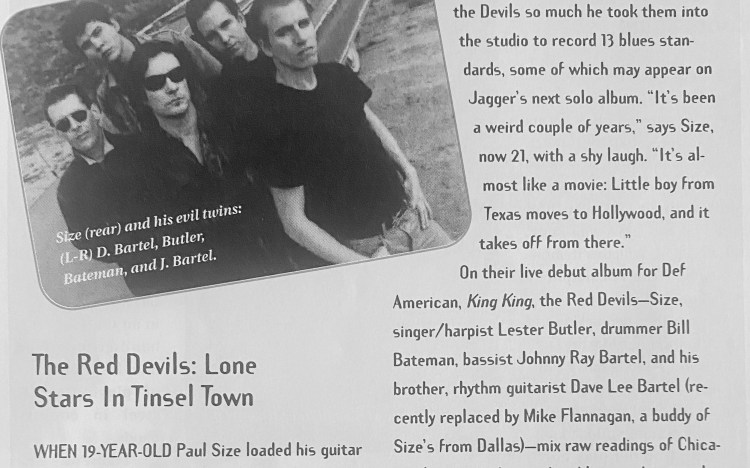
Just four years earlier, The Red Devils were taking the U.S. and Europe by storm.
Now, on a Tuesday night, July 22, Butler was in a sports bar in Lexington, Kentucky, getting ready to unleash his new band on the few dozen assembled in the audience.
These weren’t The Red Devils. In fact, they weren’t even the “13” that performed on Butler’s new CD, which had been out for just a few months.
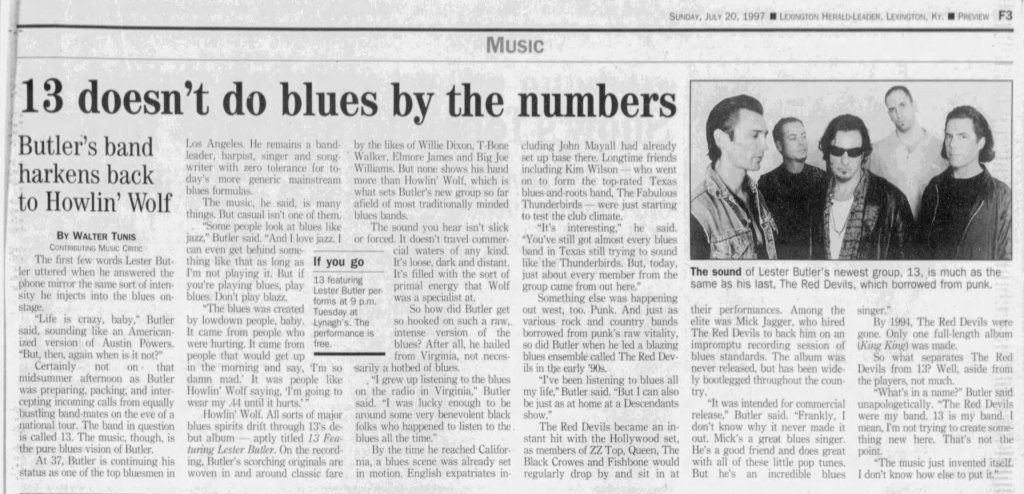
And Butler was different, too. Gone was the rockstar shaman with long hair, Axl Rose bandana and pimp coat.
Instead, this Butler was pure punk in Dickies work pants (and obligatory wallet chain), T-shirt and new tattoos crawling up both arms.
The only other time I saw Lester Butler in person was four-and-a-half years earlier, fronting The Red Devils at a local bar. Everything about him on that night was heavy — the way he dressed, the way he walked, and the swirl of discontent that seemed to hover over him.
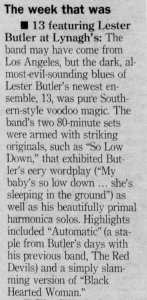
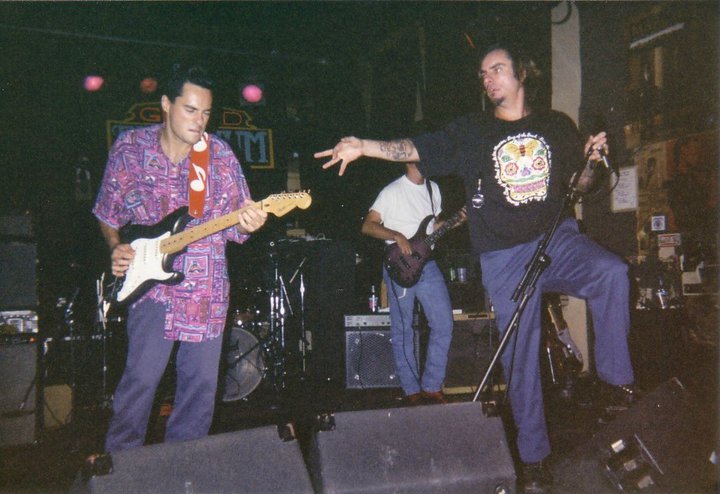
Now, at Lynagh’s in Lexington, Butler was clear-eyed and intense, stalking the stage. I was surprised at how small he was in person. The new look matched a leaner band and sound. And from his opening notes, he played with a purpose.
“Night” was unlike anything put down by the Devils or on the 13 record. The audience didn’t know what to make of it. They hovered by the bar tables, leaving the area in front of the stage empty.
Butler, still playing the harp, moved from the stage to the floor, dropping to one knee, staring at the crowd in the shadows, as if he was taking names. With his hand, he punctuated the rhythm, jabbing toward the patrons — to vex, hex and enchant his audience.
It was one of the most bizarre performances I had ever witnessed at a blues show. And just as The Red Devils had hooked me in 1992, Butler was doing it all over again.
Listen: Down In New Orleans
The band was driven by the outstanding drum work by Eddie “Lips” Clark, who would become something of a musical catalyst for Butler. Clark was game for any direction Butler chose in a flash. If Lester was shadowboxing, Eddie Clark was better than a shadow — in control, and almost a step ahead.
This quartet’s interplay was jazzier, looser than what we had come to expect from “13” and “King King,” with several songs stretching out beyond the 10-minute mark.
On top was phenom Enrico Crivellaro, a model of that next-gen West Coast-style guitarist of the era: traditional, swing, riff, rock. Everything with class and style. Butler deferred many bars to Crivellaro’s solos.
And finally, Mississippi Mike Hightower held down the bottom, solid, thumping and shuffling.
The shows on this tour were probably a wake up call for Butler. On his last tour of the U.S., in 1992, he was with a hot, up-and-coming band with the backing of a trendy label.
This time, it was easy to engage the band after the show. Tom and I got to talking with Crivellaro, who brought us to the band’s dressing room.
We shot the shit for a few minutes with the guys. Unlike in 1992, Butler didn’t grunt at me. He was quiet, and focused on wrapping up his show. He seemed exhausted, a little shy, and ready to hit the road. We were able to help with some info on that.
But this quick little interaction would come back into play for me the very next night — and for the next several years.
Bloomington, Indiana
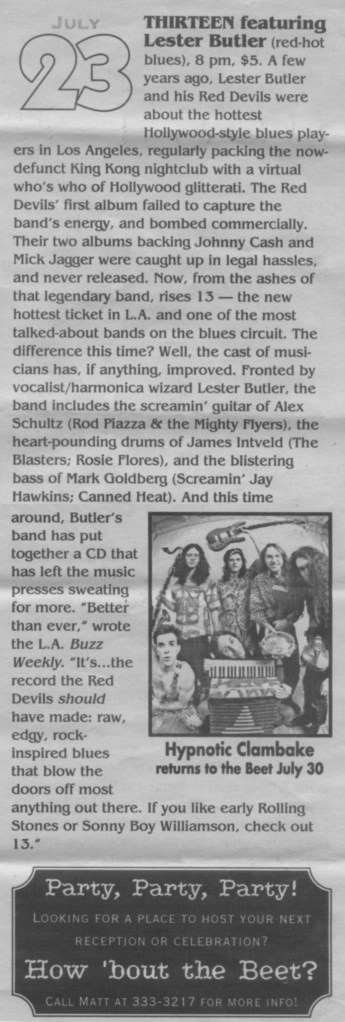
On July 23, 1997, 13 was in my city … no four-hour drive to Kentucky and back to see the band. This was right down the street.
The music on that night was, of course, all you could want, but a few other things stick out to me 27 years later … primarily around my memories of Lester himself.
In the same way I was comfortable, so was the band. The setlist did not change much, if at all, from the night before, but Butler was much more engaged with the appreciative crowd (a portion of whom I forced to be there, under threat of significant violence). The club, the Wild Beet, was more intimate, and the Bloomington, Indiana, audience much more savvy than that in Lexington (yet another check in the win column for Bloomington over Lexington).
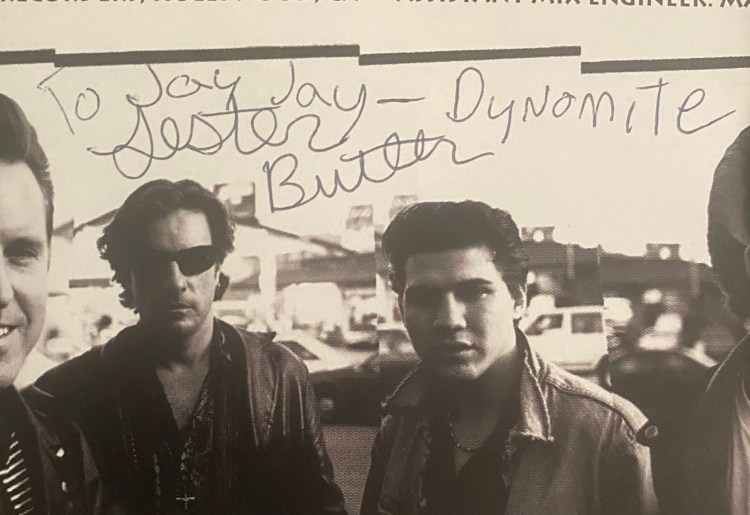
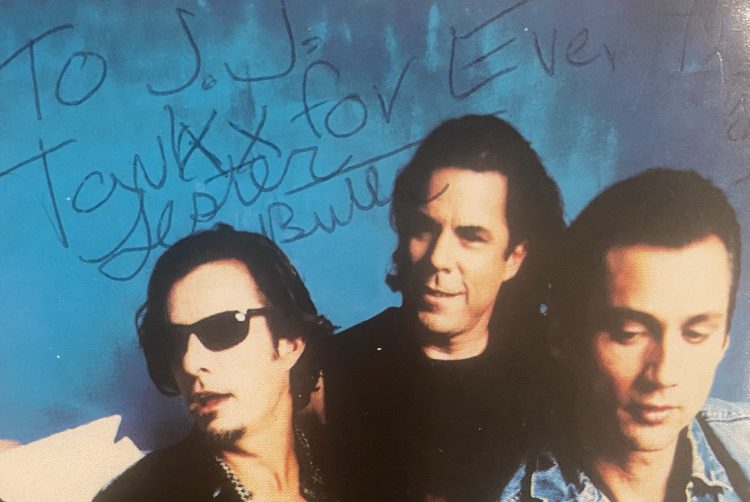
Unlike the grunter from 1992, or the wary leader from the night before, Butler was relaxed and affable on this night. He remembered my name, and signed my CDs (with a cheesey joke about another famous “J.J.”).
But I also had the chance to tell him how much his music — The Red Devils’ music — meant to me and my friends. We heard that record and started a band. We played those songs. We lived vicariously through “King King” (probably the safest way to go). Lester was humble, and appreciative.
That night was crucial, too, to making connections with Eddie Clark and Enrico Crivellaro, connections that continue to this day.
Just nine-and-a-half months later, Butler would be dead, and the whole thing would be over.
Listen: Last Night
Since that time, it has given me some comfort that Butler’s cohorts in 13 have been able to tell a much happier story about their time with the harp player, who maybe learned a few things after the contentious ending of The Red Devils. Hanging out with Mick Jagger is one thing; getting bumped down to a tiny indie label like Hightone is a pretty brisk shot of reality.
The two nights with Butler that summer gave just a glimpse of what he still had to offer.
Setlists (incomplete)
Lynagh’s, Lexington, Kentucky, July 22, 1997
- Night
- Down in New Orleans
- Jump-shuffle
- I Got a Girl
- Ah’w Baby
- Don’t Lose Your Cool
- Who Do You Love?
- Jump instrumental
- Automatic
- So Low Down
- Black Hearted Woman
The Wild Beet, Bloomington, Indiana, July 23, 1997
- Night
- Down in New Orleans
- Jump-shuffle
- Last Night
- So Low Down
- Pray For Me
- Boogie Disease
- I Got a Girl
- Way Down South
- Everything Gonna Be Alright
- Take the A Train
- Who Do You Love?




 No Fightin'
Hello JJ,
This is Eddie Clark, I have sent to you by regular postal service a letter with some information regarding a limited supply of t-shirts. I hope you received the letter and I hope I had the correct P.O. Box. I hope to hear from you soon!
Eddie
LikeLike