
On July 29, 1991, The Red Devils began recording their debut album. Created over three dates, “King King” now stands as an enduring modern blues classic with a small but diehard fanbase around the globe.
Today, on the 35th anniversary of the beginning of recording, No Fightin’ reveals some of the untold stories behind “King King.” With recollections and notes from sources inside or close to The Red Devils organization, we learn exactly how the sessions went down and, for the first time ever, hear an outtake from the recording of “King King.”
Blues explosion
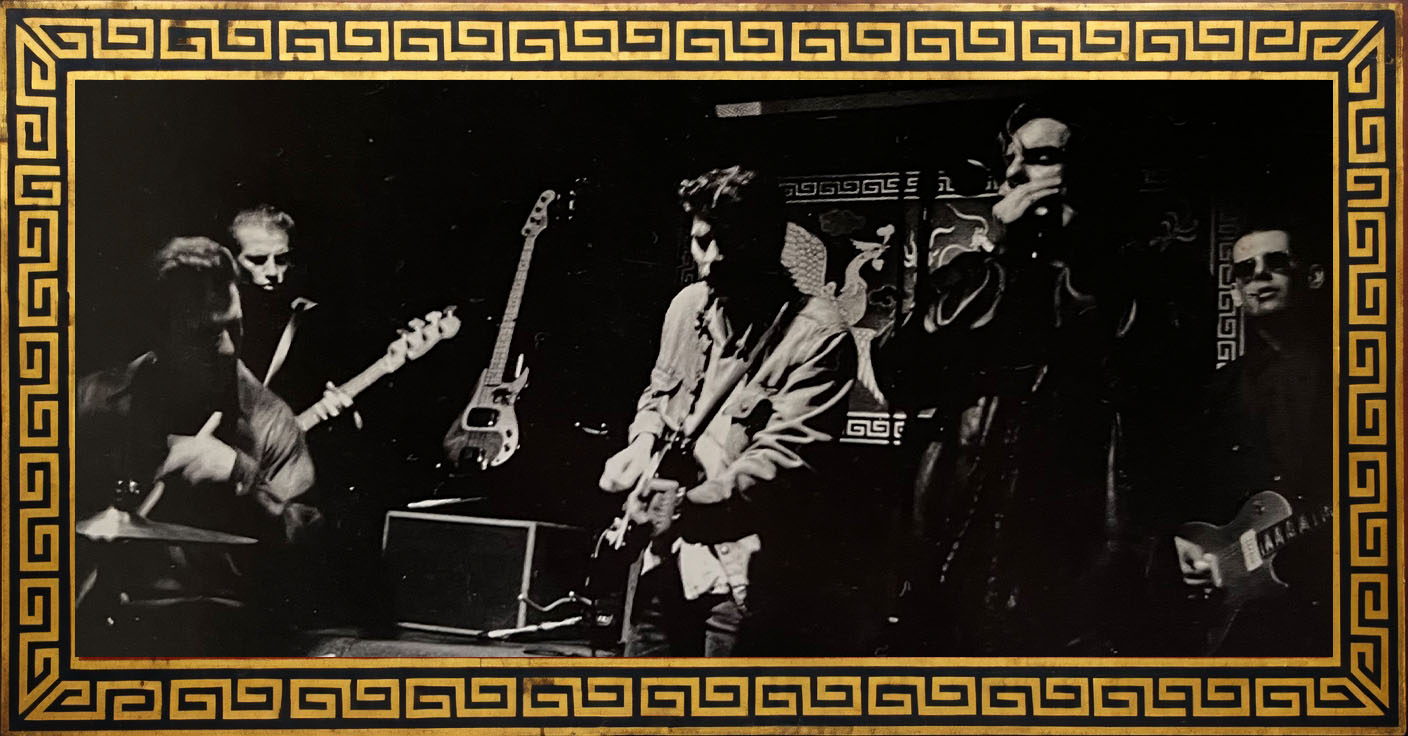
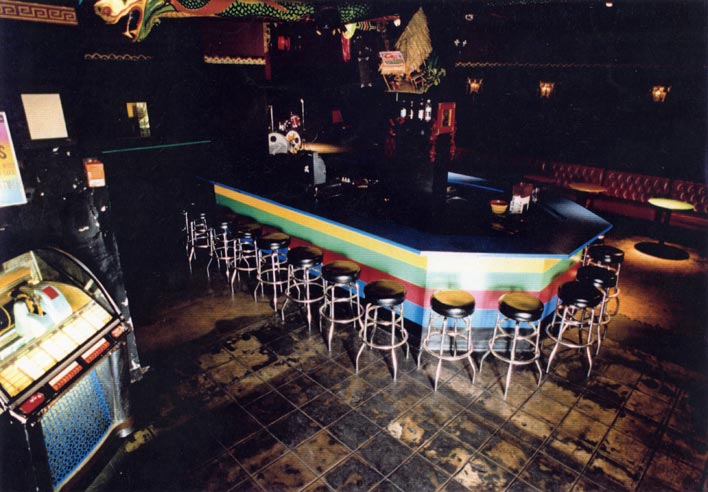
The music rushed forward with the fury and rhythm of a Gatling gun, released from the 12-by-15-foot stage recessed into the back wall of the old Chinese restaurant.
The musicians were on top of each other, in a unique setup: Bill Bateman’s drums were positioned at the front of the stage — everything else orbiting around the star. Jonny Ray Bartel hovered over Bateman’s right shoulder, a rhythmic angel or devil or whatever was called for.
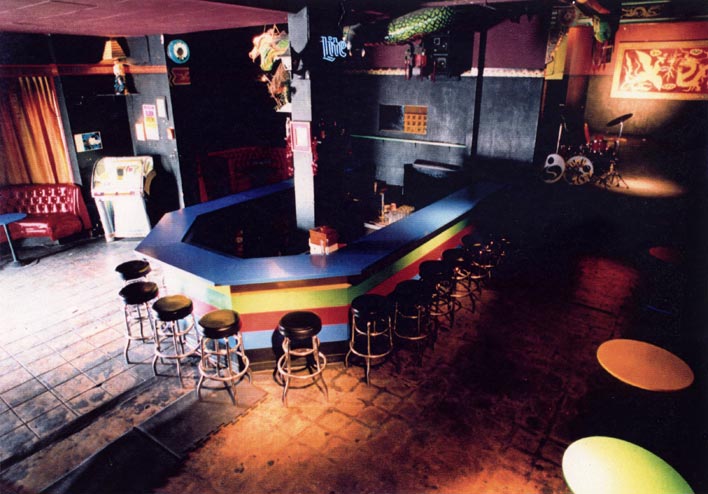
Everyone else filled out stage left: Lester Butler shimmied in place holding a mic stand, with a harp gripped in his right hand. “The Kid” Paul Size, head down, would squeeze in from the back when called upon for another Stratocaster fury. Meanwhile, Dave Lee Bartel haunted the far back of the stage, behind dark shades. Dave Lee kept to the margins, but his impeccable rhythm on his Gold Top Les Paul kept the band in check.
The amps rested on a shelf behind the musicians, a collection of vintage tube amps, likely in various states of distress. They were about shoulder-high on that shelf, and cranked to keep up with Bateman, dramatically pounding out another two-handed shuffle up front.
The sound formed under pressure, but would be contained in this little box for only a fraction of a second. As it raced forward, the blues exploded from the barrel, hitting the crowd in a wave as quickly as the band could snap the hammer.
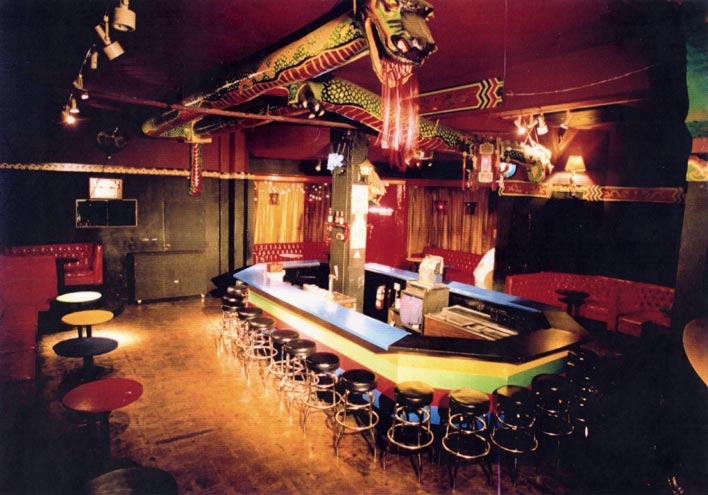
Released from the stage, the music filled any open space in the room, in an undeniable call to attention — and the crowd wanted more.
Like Little Walter sang, “Boom boom! Out go the lights!”
It’s Monday night, and The Red Devils are on at the King King!
This was the sound and feeling that entranced Rick Rubin, who determined to capture it all 35 years ago.
Moonlighting
During the spring and early summer of 1991, Def American impressario Rick Rubin was in the Laurel Canyon hills, overseeing a mansion’s worth of egos and abilities and aspirations and finances.
The Red Hot Chili Peppers were ensconced in a 24-7 writing-recording-production cycle afforded only the biggest rock albums. And this record, the band’s fifth, aimed to be the Peppers’ mainstream breakthrough. Producer Rubin and Warner Bros. Records were sparing no indulgence to make sure the recording sessions were fruitful. Rubin put the band up in a 1925 Mediterranean-style mansion that once belonged to Errol Flynn, and may or may not have been haunted. This is where the Peppers essentially lived and worked for seven hot weeks, creating one of the biggest albums of the 1990s, “Blood Sugar Sex Magik.”
What Spin and Rolling Stone did not report was that Rubin was moonlighting: When he wasn’t coaxing “Under The Bridge” from a reluctant Anthony Keidis, Rubin would take his Rolls Royce for the five-mile drive down the hill from 2451 Laurel Canyon Boulevard to the corner of Sixth and La Brea in Hollywood, to the King King. In the back of his mind, he was developing a project for his own label that would be the rowdy stepbrother to the Peppers’ bid for superstardom.
In early 1991, after some well-known concessions to Rubin’s preferences in branding (the band name was changed from “The Blue Shadows” to “The Red Devils”) and lead guitarist (then-unknown Paul Size landed the coveted spot)1 the project would begin in earnest.
The sessions for what ultimately became “Blood Sugar Sex Magik”2 ran from May through June of 1991. As that project entered its final stages, Rubin began preparing for The Red Devils recording. The band members had hoped their album could be produced by George Drakoulias, who had guided The Black Crowes’ wildly successful debut on Def American, 1990’s “Shake Your Moneymaker.”
Instead, they had to “settle” for Rubin, the star producer who took a hands-on approach with the Devils. He had a very specific, boutique vision in mind for the sound and look of the album.3 It was less about perfection and more about a spirit, a feeling, maybe even a memory of those Monday nights. This would not be a polished-in-the-studio debut. Rubin wanted to document a scene, a moment in time.
The Red Devils would not be getting their own recording mansion.
The King King club, the crowd — even the night of the week — would be as important to this record as The Red Devils themselves.
“I wanted people to get to hear (The Red Devils) the way I heard them,” Rubin told The New York Times for a 1992 story. “And it’s kind of unusual to do a first LP as a live album.”
The one place Rubin would cede control was in the actual performances. Rather than plot a perfectly rehearsed studio session, take after take, with perfect separation and flexibility, Rubin bet that The Red Devils could come through on the day, as they did every Monday night. The producer would employ an audio vérité approach to wrap his arms around that half-buzzed club feel he had fallen in love with.
Engineer Brendan O’Brien was drafted to handle the recording. O’Brien is credited as the engineer on several Def American releases at the time, including The Black Crowes’ “Shake Your Money Maker” and “The Southern Harmony And Musical Companion” (1992), Andrew Dice Clay’s “The Day The Laughter Died” (1990) and “Nobody Said It Was Easy” (1991) by The Four Horsemen.
Most importantly, through the summer of 1991, O’Brien was at Rubin’s side for the creation of “Blood Sugar Sex Magik.”
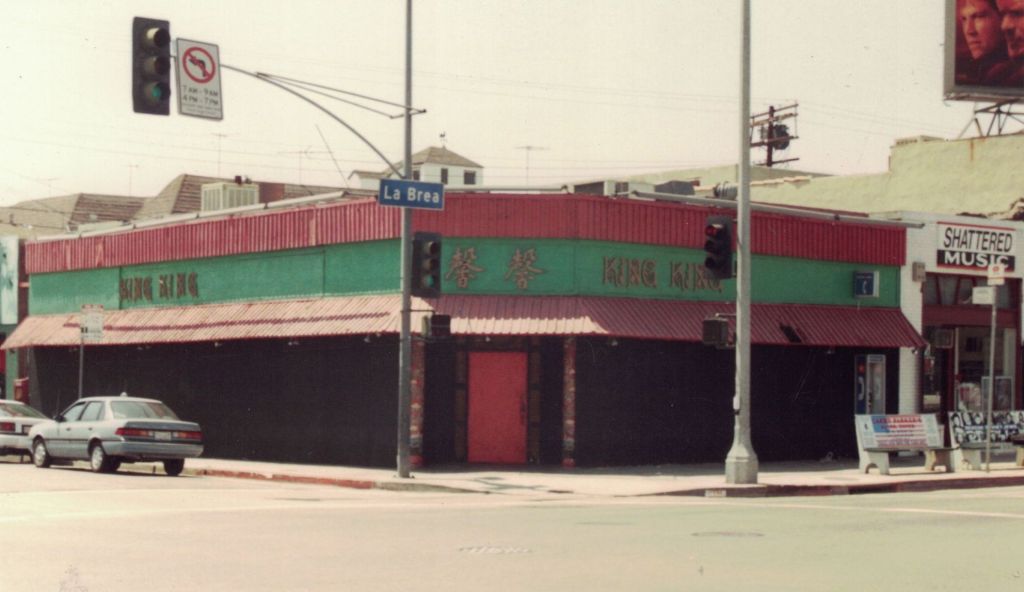
The King King “sessions,” if they can be called that, would be caught by Le Mobile, a 24-track mobile recording unit parked in the alley behind the club. The Le Mobile crew had recorded legendary albums from artists as diverse as Miles Davis, Rod Stewart and Michael Bublé, among hundreds of others. For this gig, they’d be idling out back like a delivery driver.
“(Rubin) picked out the songs and brought in a mobile studio, and we recorded it over about four nights,” Dave Lee told author Dan LeRoy for the book “The Greatest Music Never Sold.” “We didn’t even know when we were gonna record. We just knew we had to play good whenever that truck was in the alley.”
The assembled band would be rounded out by guest pianist Gene Taylor, former Blaster, future Fabulous Thunderbird, and a longtime ally of Bateman’s. Taylor was a favorite of Rubin’s, and was flown into the gigs at the producer’s pleasure.
Rubin’s one concession to tampering with the natural club sound was hiring a tuner to take care of the King King’s house piano for Taylor’s use.
3 nights, 30 songs
With the players in place, and a name he liked, Rubin laid out a schedule. On Monday, July 22, The Red Devils would be recorded for a test session for Le Mobile, with Taylor on board. After that came the three recording dates that would yield the 12 songs that would become “King King”:
- Monday, July 29, 1991: Recording session 1, with Taylor guesting.
- Monday, Aug. 5, 1991: Recording session 2, also with Taylor.
- Monday, Nov. 4, 1991: A final pickup session. Taylor would not appear on these tracks.
The gigs were open to the public, as usual, and many patrons likely didn’t know they had stumbled into a live recording session. If it was like any other Monday, a lot of them wouldn’t remember the finer points of the evening by the end anyway. The Devils invited some of their own guests, but otherwise were mic’d unobtrusively.
Engineer O’Brien was in the Le Mobile studio in the alley, away from the action in the club. A camera was set up at the club’s sound booth with a live feed to the remote studio, so the engineers would know when the band was taking a break. Rubin, meanwhile, sat in the club enjoying the music, as usual. “Producing.”4
The only clue that The Red Devils were recording an album for Def American seemed to be that some tunes were played more than once on the same night and, on a couple of occasions, twice during the same set.
Outtakes from the sessions show the band tackled nearly 30 different songs over the recording dates, a mix of blues standards, a fistful of originals and some songs that Butler cheekily called “o-riff-ginals” — a familiar blues groove with extemporaneous lyrics that could morph into something altogether new.
At the first session, on July 29, 1991, the band played “Devil Woman,” “She’s Dangerous” and “Tail Dragger” in both the first and second sets — clearly, these songs were bound for the eventual album.
Rubin loved the Devils’ loping version of “Louisiana Blues,” and the band took a stab at it during a “string-bass” mini-set at the end of recording on July 29. This version of the song, like all the other outtakes, was never released in any format, but the 24-track rough mix version is presented by No Fightin’ here for the first time:
Louisiana Blues (‘King King’ outtake)
24-track rough mix, recorded on July 29, 1991, at the King King.
On Saturday, Aug. 3, The Red Devils met with Rubin at his home on Lincoln Terrace, where they would hear the previous Monday’s session. That would be the extent of their involvement in the record … All Rubin needed them to do was play a couple more Mondays.
Notes from the sessions show the band did at least five takes of “Automatic” over the three recording dates. “Devil Woman” — an original obviously envisioned as a breakout song — went through at least six tries over that time.
The 12 songs that eventually made it to the album were performed almost 40 times combined over the three dates.
Even more interesting are the songs recorded for possible inclusion that didn’t make the cut. There were Red Devils live favorites (“Backstroke,” “Shake Your Hips”), timeless blues (“Wang Dang Doodle,” “Help Me”) and some tempting titles that would have fit comfortably on the “King King” sleeve (“Winehead,” “Nightcrawler”).

#KingKingXXX
Read yearlong coverage from No Fightin’ of the 30th anniversary of “King King” — influences, memories and song-by-song breakdowns
Of the dozens of songs recorded, there is no debate about the quality of the final product. But in looking at the setlists, an “alternative” “King King” album begins to take shape.
If Rubin had a rough night’s rest, or an unproductive meditation session, would he have picked the slinky “Come Back Baby” by Little Walter instead of “I Wish You Would”?
Had his barista written “Rich Rubbin” on his coffee cup that morning, would he have picked the band’s energetic Elmore James cover “Talk To Me Baby” instead of “Mr. Highway Man”?
It’s not hard to imagine a “King King” that opened with the shuffle “Have A Good Time,” followed by “Shake Your Hips.” With high hopes, “Devil Woman” would be placed as the third track, a prominent singles spot. Then “The Kid” Paul Size would show his chops on the pulse-pounding Gatemouth Brown instrumental, “Okie Dokie Stomp.”
The musicians have their suspicions, but really can only guess which takes over the three sessions ended up on the final record.
All except for two songs.5
On Nov. 4, 1991, the band performed two songs that would become highlights on “King King”: Sonny Boy Williamson’s “Cross Your Heart” and Little Walter’s instrumental “Quarter to Twelve.” Both are slow blues, and classics of the genre. Butler and Size are at their very best on these songs, with a sympathetic band in complete telepathic union.
They played “Cross Your Heart” and “Quarter to Twelve” one time each, and both takes landed on the final record.
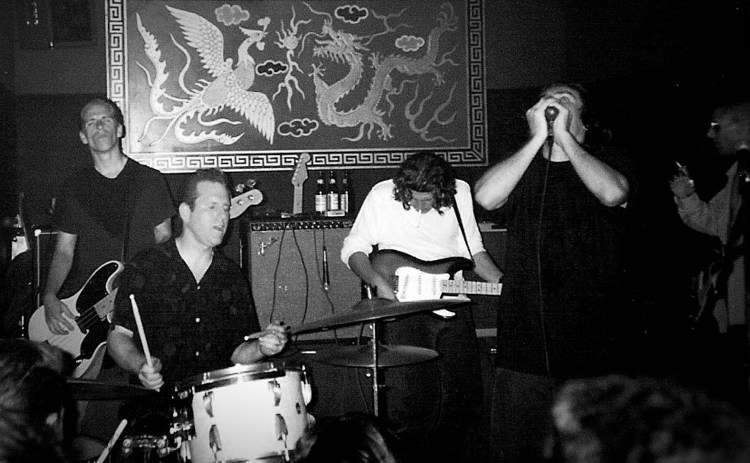
Jordan says this was the Devils’ last gig at the King King.
Live on tape
With the recordings finished, Rubin and O’Brien went away and worked on the album at Hollywood Sound Recorders.
The live approach made each take unique, and it would have been nearly impossible to piece together elements from different performances of the same song. The band played without a click track, as usual, so each song would live or die based on what happened onstage. A song’s tempo might change from night to night, or Butler might take a solo earlier, or the song might go on for five minutes instead of three, because the band was feeling it.
Sources say there are no overdubs on the album — that everything heard is what happened, live on tape. Through careful editing, though, the hour-long album plays like one nightclub set. Rubin and Co. pulled random onstage moments to place strategically throughout the album — tuning guitars, or reminders of song keys.6
The only post-production “trickery” was on Size’s guitar. The Texas player provided a stinging guitar sound onstage, reminiscent of the distinctive, single-string style of fellow Texans such as Freddie King. That sound needed to be bolstered for the record. O’Brien ran Size’s guitar track through a tube amp in the studio and recorded that for the final lead guitar track on the album. With Size’s “amped up” sound and the bleed-through of his live guitar from the stage mics, the guitarist comes out with a heroic, three-dimensional tone on “King King.”
When all was said and done, Rubin settled on 12 songs for the album. Whether they were the best takes, or just Rubin’s pets, is lost in the haze.
(Ironically, “Louisiana Blues,” did not make Rubin’s final cut.)
Again, The Red Devils were not asked for any input into the final track list or the mixes. Everything from the cover photo to the typography (Lithos Pro Black) was part of Rubin’s vision.
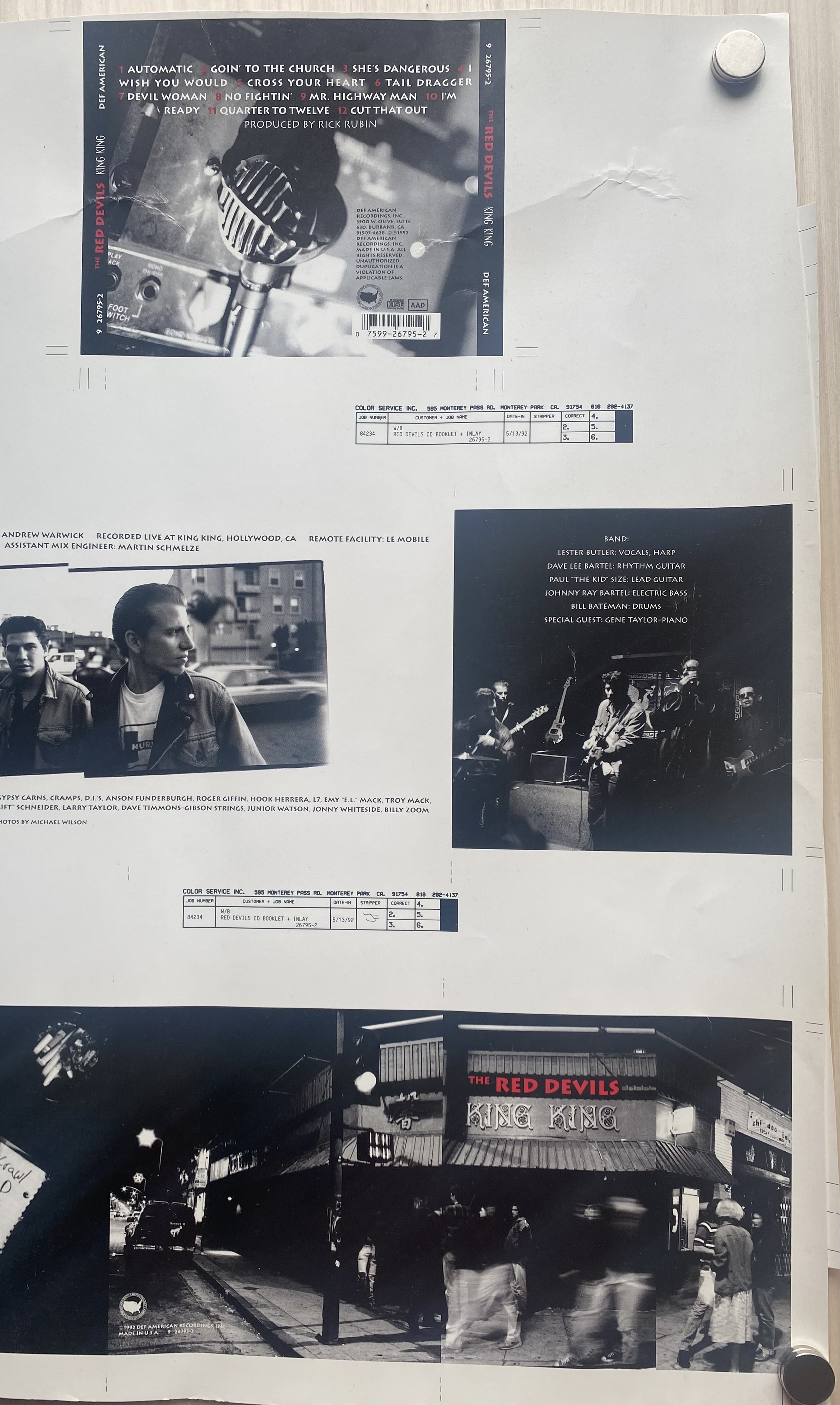
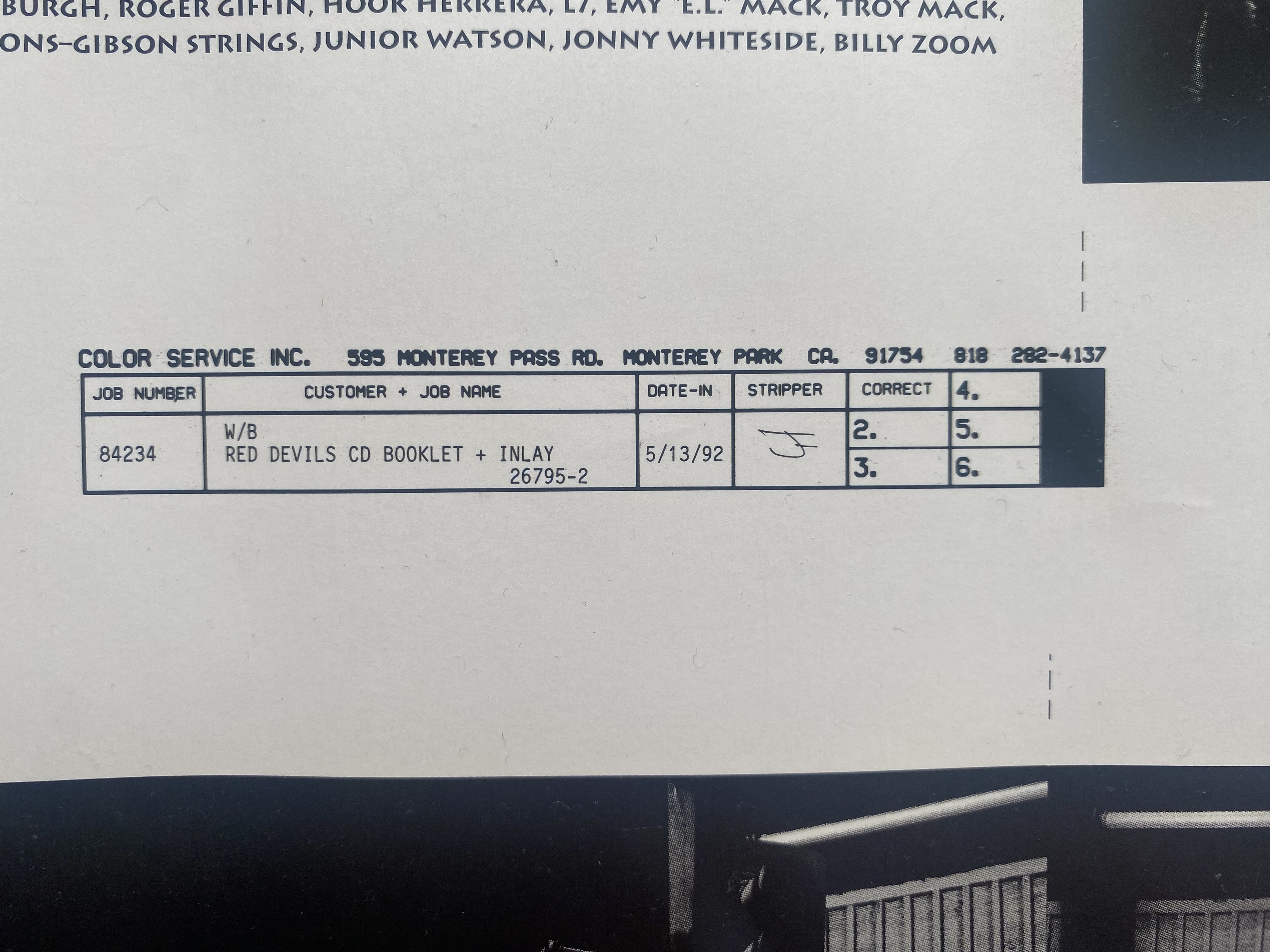
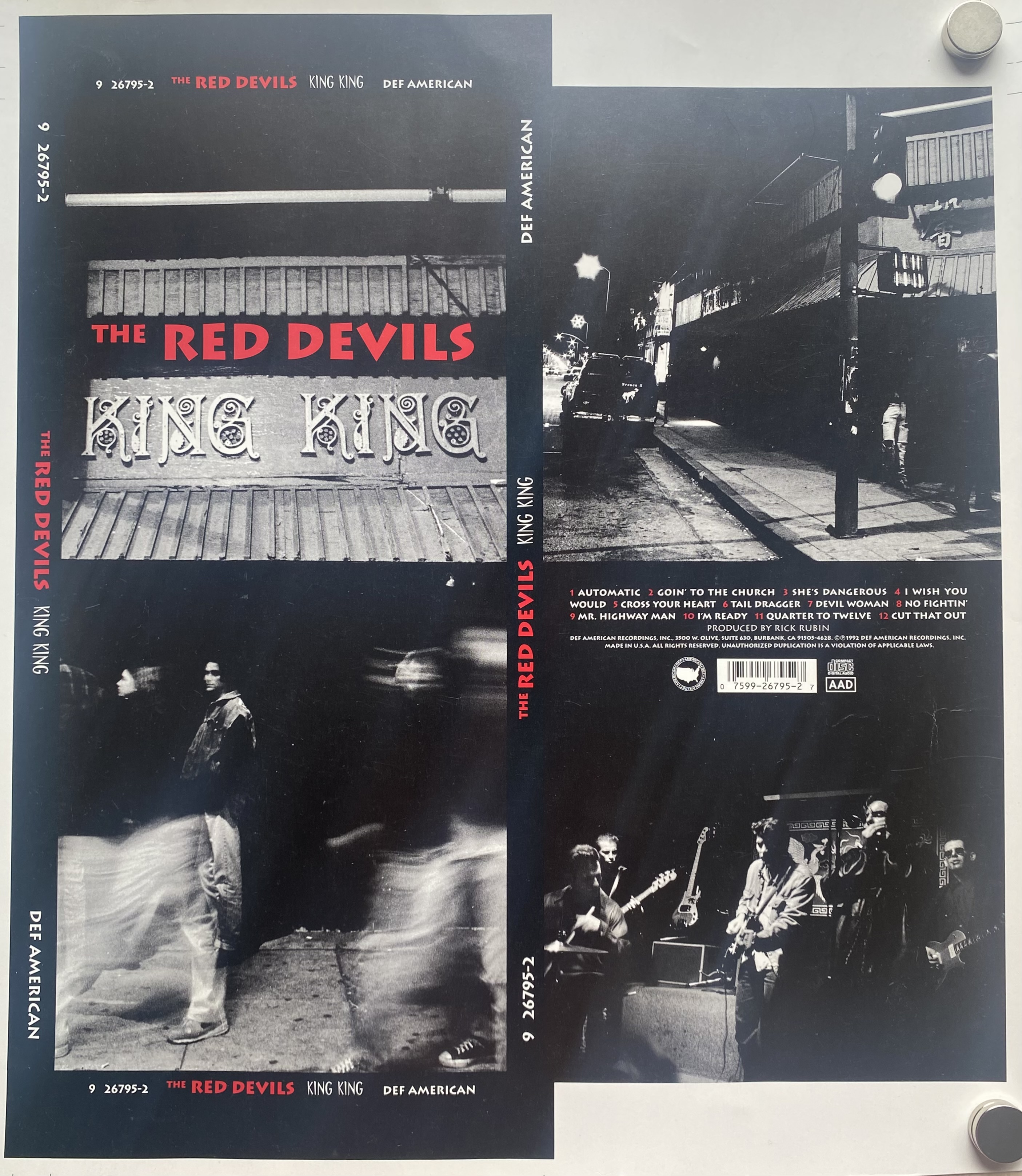
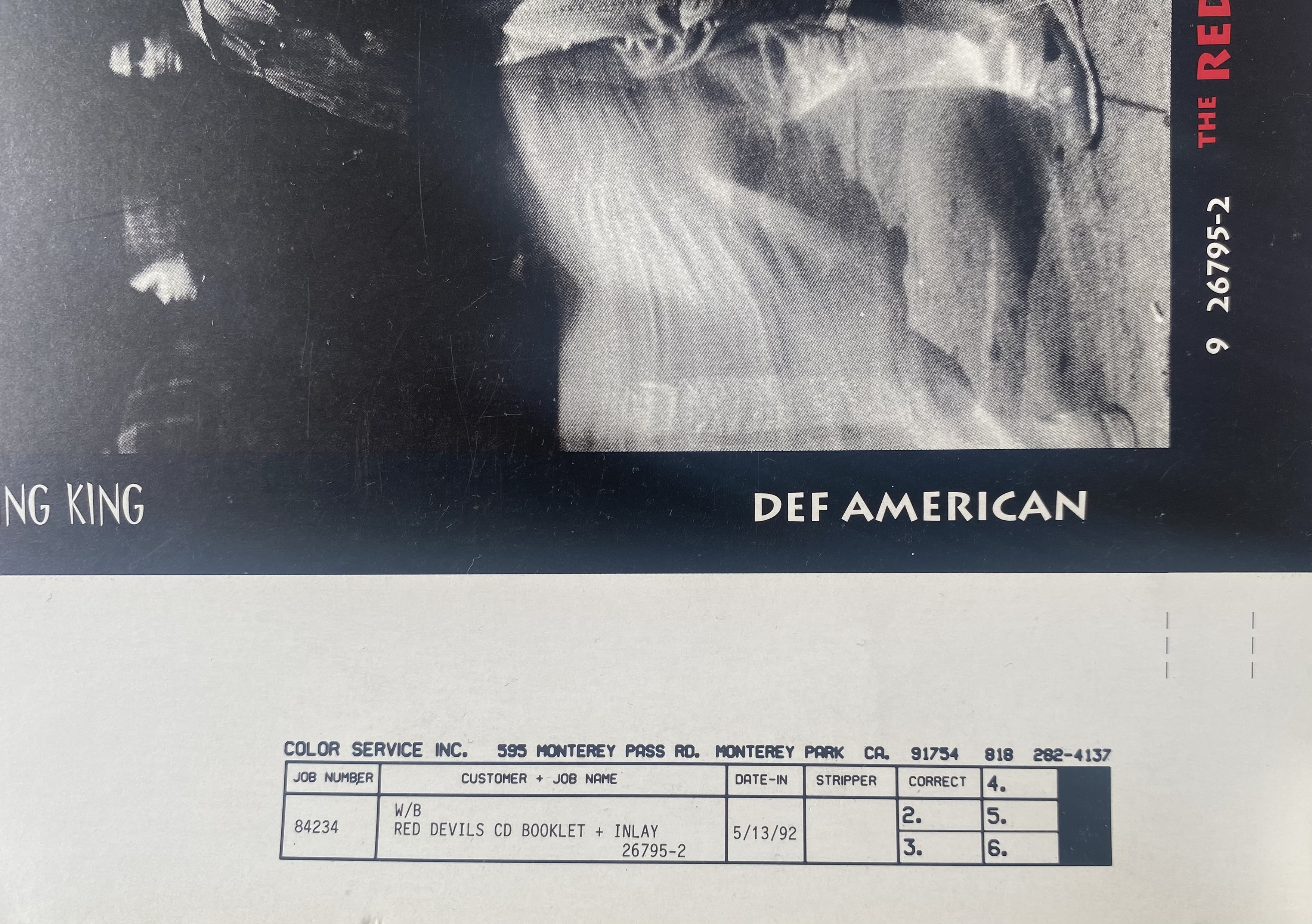
Above: Detail images of the original printer proofs for the “King King” CD sleeve, notes and longbox
However intentional or not, Rubin managed to arrange the platonic ideal setlist of blues grooves and tempos, dynamics and dramatics, highs and lows. In fact, the dozen “King King” songs represented some of the bedrock themes and melodies of blues — if someone wanted an introduction to some of the diversity of post-war electric blues, “King King” could be that table of contents.
The style of songs the Devils played had been perfected over decades by the masters. These were time-tested grooves engineered to get even the hardest clubgoers dancing and drinking and making unwise decisions.
Whatever idea Rubin had in mind, The Red Devils demonstrated on three nights (and hundreds more) that a mansion is not needed when you’ve got the goods.
With the Devils, you just had to hit “record.”
The ‘King King’ setlists
Here are the setlists for The Red Devils’ “King King” sessions, along with a few notes and speculation.
Monday, June 29, 1991
This session at King King would include Gene Taylor on piano, and conclude with a three-song set with Jonny Ray Bartel on upright bass. Soundcheck began at 4 p.m.
Set 1
- Mr. Highway Man
- No Fightin’
- Backstroke
- I Wish You Would
- Winehead
- Devil Woman
- She’s Dangerous
- Tail Dragger
- Fast harp instrumental
Set 2
- Automatic
- Shake Your Hips
- Tail Dragger
- I’m Ready
- I’m Tryin’
- Oh Baby
- Have A Good Time
- Devil Woman
- Talk To Me Baby
- She’s Dangerous
String bass set
- Louisiana Blues
- Come Back Baby
- One Of These Mornings
Monday, Aug. 5, 1991
Gene Taylor was again on board for this recording. The band soundchecked at 9:30 p.m., and played from 10 p.m. to 2 a.m.
Set 1
- Mr. Highway Man (CD)
- No Fightin’ (CD)
- Backstroke
- Tail Dragger
- Winehead
- I Wish You Would (CD)
- She’s Dangerous
- Automatic (CD)
- Devil Woman
- Wang Dang Doodle
Set 2
- Mr. Highway Man
- Help Me
- Shake Your Hips
- Blues With A Feeling
- Talk To Me Baby
- I’m Ready
- Automatic
- Devil Woman
- Wang Dang Doodle
- Cut That Out
Set 3
- Louisiana Blues
- Come Back Baby
- Everything Gonna Be Alright
- Have A Good Time
Monday, Nov. 4, 1991
This was the band’s last recording session for “King King.” This time, Gene Taylor was absent (though Bruce Willis and Demi Moore were in attendance). The Red Devils played from 9 p.m. to 2:30 a.m.
Set 1
- Blues With A Feeling
- Mr. Highway Man
- Backstroke
- I Wish You Would
- Winehead
- Going to the church
- Dangerous
- Okie Dokie Stomp
- Automatic
Set 2
- Nightcrawler
- Devil Woman
- I’m Tryin’
- Cross Your Heart (CD)
- Tail Dragger
- I’m Ready
- Shake Your Hips
- Automatic
Set 3
- Boogie Disease
- Winehead
- Boogie at Midnight
- Quarter to Twelve (CD)
- Goin’ To The Church
- Devil Woman
- Tail Dragger
- Wang Dang Doodle
- Louisiana Blues
- Cut That Out
- Come Back Baby (Little Walter)
- Wang Dang Doodle
- Tail Dragger
‘King King’ U.S. release: Tuesday, July 28, 1992
“King King” was released with a dozen songs culled from three different gigs. Here is the final tracklist, with the presumed takes:
- Automatic
- Goin’ to the Church
- She’s Dangerous
- I Wish You Would (Aug. 5, 1991, Set 1)
- Cross Your Heart (Nov. 4, 1991, Set 2)
- Tail Dragger
- Devil Woman
- No Fightin’ (Aug. 5, 1991, Set 1)
- Mr. Highway Man (Aug. 5, 1991, Set 1)
- I’m Ready
- Quarter to Twelve (Nov. 4, 1991, Set 3)
- Cut That Out
Footnotes
(1) The band had its pick of nearly every impeccabile guitarist on the scene. Various official and honorary Blue Shadows included Smokey Hormel, Dave Alvin, Kid Ramos, Junior Watson and many other top-shelf musicians. “The Kid” Paul Size brought an energy and tone that took the sound over the top.
(2) “Blood Sugar Sex Magik” would be released on Sept. 24, 1991, ultimately peaking at No. 3 on the Billboard 200 album chart. Fourteen million copies of “BSSM” have been sold to date.
(3) In his early years with the Def Jam label in New York in the early- to mid-’80s, Rubin helped introduce the world to LL Cool J, Run-DMC, the Beastie Boys and others. But his production legend was one of bringing a minimalist spark to established acts, most notably Johnny Cash. The Red Devils were one of the very few acts Rubin himself “discovered” and ushered into recording existence himself.
(4) This was not an unusual tactic for Rubin, who preferred the term “reducing” to “producing.” In a “Blood Sugar” oral history for the Los Angeles Times, Chili Peppers guitarist John Frusciante recalled that “Rick would come to rehearsal and just observe. A lot of the time he wouldn’t even say anything; he’d just sit on the couch. We’d jam for an hour, and he’d fall asleep.”
(5) The basic tracks don’t offer many clues as many elements, including piano and rhythm guitar, are pushed further back in the final mix. There may be some places where, with careful editing, O’Brien could possibly correct a lyric or change a solo.
(6) For instance, on the CD’s fadeout, one can hear Butler say, “All right, thank you, we gonna take a short break, come on back, thank y’all!” That bit was one of several pulled from the recordings and added after whatever would be the last song on the record.
Make a one-time donation to NoFightin.com
Make a monthly donation to NoFightin.com
Make a yearly donation to NoFightin.com
Choose an amount
Or enter a custom amount
Your contribution is appreciated. All proceeds go to the maintenance and upkeep of NoFightin.com
Your contribution is appreciated. All proceeds go to the maintenance and upkeep of NoFightin.com
Your contribution is appreciated. All proceeds go to the maintenance and upkeep of NoFightin.com


One thought on “The making of ‘King King’”