
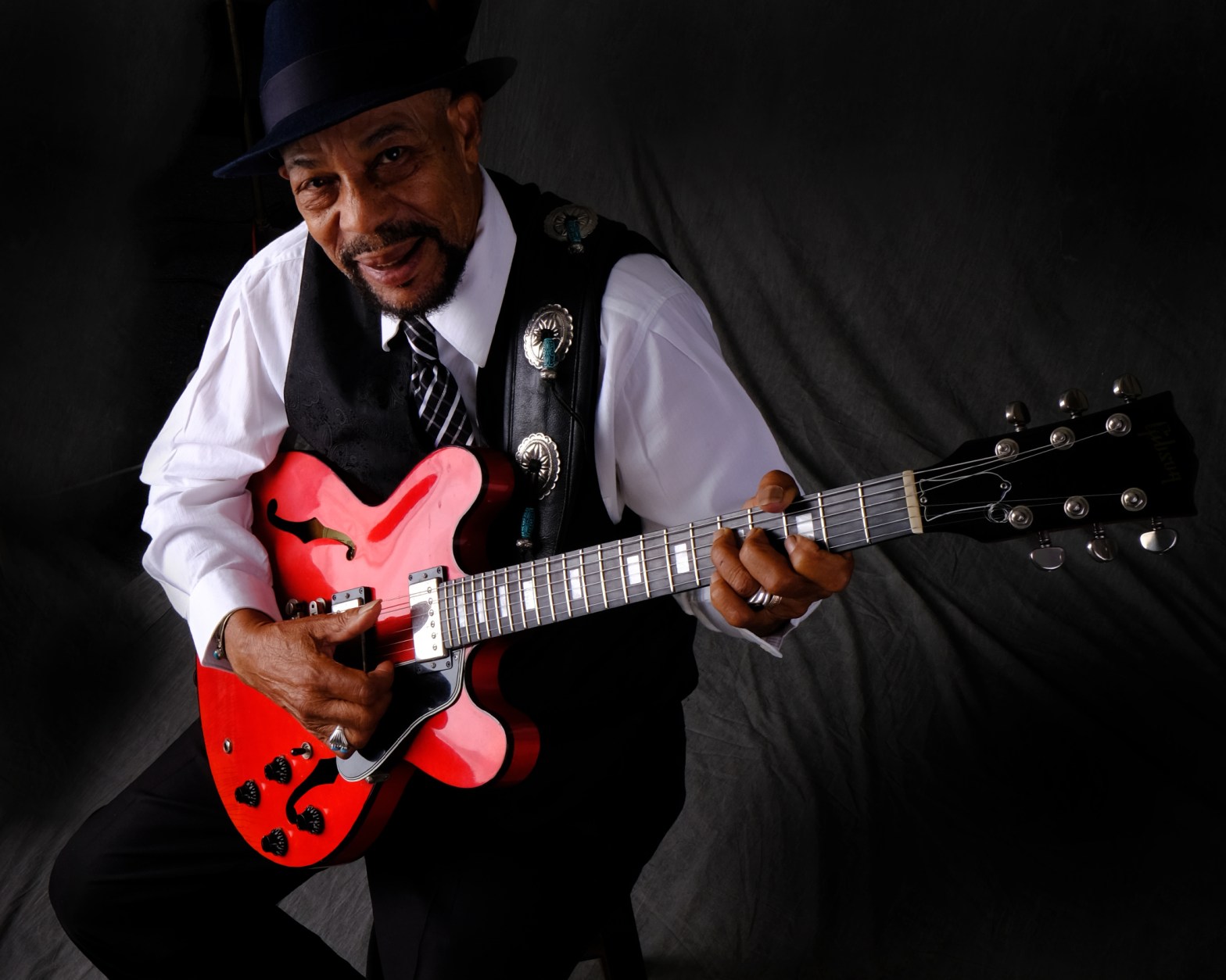

As one of the true standard-bearers of traditional blues, John Primer checks a lot of the “blues legend” boxes: Chicago blues with Mississippi roots. Raw, truth-telling guitar. Sideman to the 20th Century’s most iconic artists.
But, as Primer is quick to point out, he is more real than myth. When he took a call for an interview around lunchtime on Monday, Feb. 3, he’d already been out to replace a broken windshield on his vehicle — a necessary tool for an unflagging touring machine such as John Primer and The Real Deal Blues Band.
At age 79, he still has his foot on the gas. Primer boasts three Grammy nominations during his career, and he is up for two Blues Music Awards this year (the ceremony will be May 8 in Memphis). And he has another new album, Grown In Mississippi: A Tribute To My Home, coming out on April 11, featuring Bobby Rush, Charlie Musselwhite, Watermelon Slim, Lightnin’ Malcolm and many more guests. (Pre-sale begins March 7.)
He’s been bandleader at Chicago’s notorious Theresa’s Lounge, and anchored Muddy Waters’ final outfit. He spanned the globe with the burning Magic Slim and The Teardrops, and launched his own solo career.
Ahead of his Feb. 15 return for a performance in Brown County, Indiana, Primer revealed the lessons he’s learned, the secret to the “lump de lump” shuffle, and just what it takes to be the Real Deal.
(This Q&A is edited for clarity and length.)
Q: Congratulations on your Blues Music Award nominations. You’ve been doing this for a long time and you are still getting recognized for your work. So what keeps you inspired? What keeps you doing it?
Primer: Well, I feel good, man, and very happy about what’s happening lately. And I feel good about it because … I just keep on trying and I, I wouldn’t stop trying to get ’em, keep on, you know, keep on trying. No need to quit now. … I love to play guitar, sing, play music … so music, my music, my job, keeps me inspired.
That’s why I love to do what I’m doing. I love doing it for me, for people, for my — more for people, not myself.
I’m being recognized, you know, by all my fans. My fans. I mean, I got great fans. I’m being recognized, you know, all in the world with them and they love it. But I don’t know, to me, I don’t think some of these, uh, big organizations, they don’t really realize what blues is all about. They hear blues, but they don’t, they don’t study and know what it’s all about, which is a real thing.
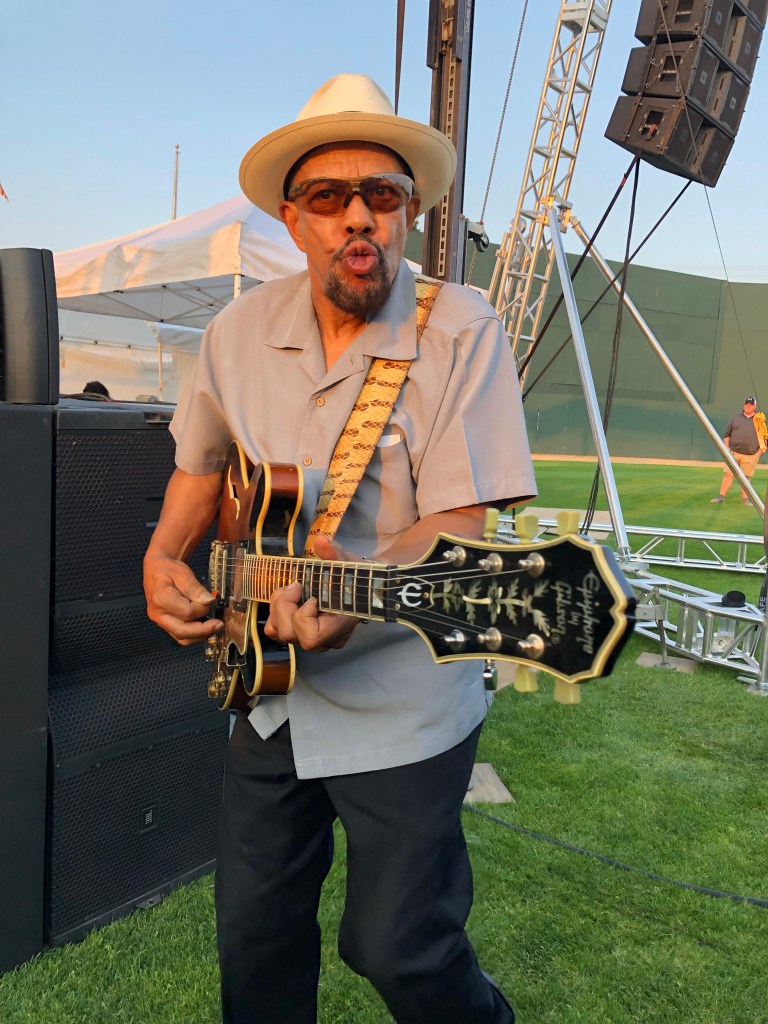
Q: You’ve got the Real Deal Blues Band and you’ve got “The Real Deal” album. So what is the “real deal”? What does that mean to you?
Primer: Well, real deal, that just don’t mean that because my band’s the real deal. But a lot of people just do things and play the real stuff. And like, they play the right way, the old way. Just like a basketball game. They play. They have to change their style. They just got different rules. But that’s the way the real deal is.
Like (Evander) Holyfield was “The Real Deal,” I was “The Real Deal” before they started using this name. I was the real deal, had a CD, and Buddy Guy got a “Real Deal” CD and I got another lady got “Real Deal.” But real deal is just about being real and, and keeping everything real. And you be real yourself with people. So that’s what the real deal is.
And I play the original sound. That’s why they call it the real deal. Like John was the real deal. (laughs)
Q: What was your first encounter with blues music? What grabbed you?
Primer: My parents and my grandparents and aunties and things. I’m from a place called Camden, Mississippi. And I grew up down there, so they was playing it all the time, you know, people singing, they coming up and down the road. Had a cousin, it was Sunday, they’d come down, they would be coming down the road playing some blues. So that inspired me a lot. … They were listening to all type of music back then, WDIA Memphis, all that type of music, doo wops and stuff.

I listened to all of it, but blues inspired me more because I wanted to play a guitar. I didn’t know nothing about no guitar player playing, you know, get blues and stuff, you know, like these other guys. I didn’t know what it means. So by me playing guitar, that’s what I wanted to do. And I found out playing the blues was very easy because I played gospel stuff a little bit in church. But blues was the thing that hung onto me because the way I grew up and the way my grandparents used to have fun all, you know, and, uh, be happy. Regardless what the sharecropper did the other year, they always happy. They played a lot of blues and stuff. Yeah.
So that’s what the blues is. Bringing people together and bringing the people that feel sad, make them feel good. Because they come to me to my show and some people come up to me, a young lady said, “I was feeling so bad before I came here. I came here, now I can go home and rest. Good now, man, blues really made me feel good.” Thank you!
Q: You were a very, very young man on that Chicago blues scene when you moved up there to start playing and going out to Maxwell Street and some of those great clubs in Chicago at that time. What did those older guys, those veteran blues players, think of you as a younger player coming on the scene?
Primer: When I came to Chicago, I didn’t get all that kind of recognition because I was still learning. I was 18 years old. I was still learning. I wasn’t going out, I wasn’t old enough to go no clubs or nothing like that. … When I got to Chicago, I didn’t even know these guys was alive, man. So when I got real recognized, when I made my way to this club called Theresa’s Lounge. That’s when it really started for me. Hanging out on Maxwell Street and playing all the clubs on the west side, was just a gig, you know, have fun to make a little change. But after I made my way down to Theresa’s Lounge, that’s where I was being recognized there, you know?
With Junior Wells and all, James Cotton, all them, all the old musicians would come down there. Yeah. Every musician in Chicago, old guys would come down there, hang out.

Q: You played with Willie Dixon’s band in the late 1970s, and then got the call from Muddy Waters. Muddy was in a really weird place at that time, his band had just left him (to form The Legendary Blues Band), and he had to put a new band together. What were you feeling to be accepted into the Muddy band, and what was the pressure like for you?
Primer: Oh, you know what, like I said, I got my start down at Theresa’s. But when I was working down there, I used to travel a little bit with Buddy Guy’s brother, Phil Guy.
Willie Dixon used to come down there and sit down and hear me playing all these Muddy and all these Howlin’ Wolf tunes that he’d written. So 1979, I think (guitarist) Mighty Joe Young, or one of them wasn’t going play with (Dixon), so he came down to Theresa’s and asked me to join his band in 1979. …
But 1979 Muddy Waters, we all on the tour, went to Mexico. And Willie Dixon opened up first, you know, Muddy was the headline. But after the show, I heard Willie and Muddy was talking, he asked, “Hey, who the young man that playing that guitar with you?” And Willie Dixon said, “That’s John Primer, yeah. He works down at Theresa’s Lounge with your old guitar player, Sammy Lawhorn.” “Oh, yeah?” And (Muddy) said, “That man, that man, that man sure knows my music!” I was eavesdropping (laughs), “That man sure know my music.”
And so 1980, when the old band quit, he called Willie and asked for me. Muddy Waters sent his harmonica player, George “Mojo” Buford, down there and got me, asked me, do I want play for Muddy. Yeah, man! I jumped for joy. I dreamed that when I was 14 years old, Mississippi, that I was playing in Muddy’s band and I jumped for joy.
But I never been, you know, intimidated by playing with any of those big guys because I was used to all of them coming down to Theresa’s there. And I never was nervous or nothing, because I knew all the Willie Dixon stuff, knew all the Muddy stuff. Yeah. And so I knew Muddy, all the Muddy stuff, because that was my big study all my life in Mississippi. All my grandmother played was Muddy. So I wasn’t nervous at all. And I never been stage fright.
Q: I’ve heard that Muddy had kind of passed the torch to a few guys, like Buddy Guy and Junior Wells. What was the lesson you took away from Muddy Waters?
Primer: Yeah. He said, just go play. He said, you know, you are a very good guitar player. know you favorite play, I like way you sound, you know my music. He said, but when you get up there play, said, don’t worry about me. So play whatever you wanna play, you know, play whatever you want to play (when you open for Muddy). But when I come up and play, just play my shit. (laughs) You know, so we open up the show, I do whatever. Then he get me a solo sometime on his gig. He looked at me and said, play that young guitar! He liked that band. He liked the second band.
Q: I’ve got to turn to Magic Slim, because I think that’s where a lot of people know you from. You were on so many of those albums and you toured really hard with Magic Slim and The Teardrops. What do you think was the “magic” of Magic Slim and The Teardrops?
Primer: When I got with Magic Slim band, you know, was the same way. So when I got with the band, I knew the drummer, he was in the (Theresa’s) house band, Nate Applewhite. Magic Slim played nowhere on the west side. I never had seen him, didn’t know nothing about him. I knew Hound Dog Taylor, but I didn’t know Slim. And then when he came down there, the drummer told him they needed a guitar player. He said, well, you get ol’ boy down Theresa’s. He said, wait a minute, John Primer?
So I got in this band, and it wasn’t no problem because he was playing all traditional blues, Muddy Waters, all that stuff, the same stuff. So I didn’t have no problem because they, I knew how to play all that stuff. And so I didn’t have no problem with him. All the 13 years I worked with Magic Slim. And we never, we never had a falling out. He never yelled at me or something like that about anything. They were just a good band, good group. And we all worked together, man. We never had a problem for 13 years. They was a good group to work with. So, hey, I stayed with him because he was working more than anybody else.
Well Junior Wells and Buddy had split it up. See? He was the hottest band back then, Junior and Buddy. And then when they broke up, then Magic Slim and The Teardrops took over and then Magic Slim got real, real, real good, popular. When I got in there, I changed the whole scene of the band and how to play the lump and which way for the bass player to play just one note. (hums a one-note bassline) No, no, come on, play this way. We developed that lump. The lump lump sound. Yeah.
Q: That’s the thing that gets ’em out on the dance floor, right?
Primer: That’s what I say about the young dudes. They don’t know, (hums a shuffle bassline) they, when you get to turnaround (hums a turnaround), well, that’s for a slow song. But I listened and Magic Slim played like a record. He played always through, wasn’t no turnaround. He shuffled stuff just go always through, turn around. No, doo-doo-DOO. Yeah. Do that. And that’s the way I play now. And, uh, Muddy’s stuff was that way, too. People just don’t know what, don’t realize it.
That’s, that’s why, and I call it straightforward blues, and I tell them, “Hey man, let’s play straightforward blues.” And if they don’t know, I explain it just like when you, when just listen to record, man. See what you hear in there. You don’t hear want these (hums a complicated bassline), you don’t hear that just (play) straightforward, straight. That’s what I call it.
Q: Now that you are one of the veterans out there, still touring and recording, as Muddy or Willie Dixon or Magic Slim might have passed some of those lessons onto you … what’s your lesson for the next group of players coming up?
Primer: Just keep doing what they doing. Keep playing the music they love. Keep doing what they love to do. Even though they don’t, if they don’t change, they don’t go to real blues. Just keep on playing and try to play some blues and mix it up together. That’s OK. Play what they playing, but keep it real and respect your audience. And respect your band. Respect everybody, you know, because those are the ones that they make you, your audience. So you, you can’t all be ignore them and you can’t be antisocial with them. You gotta talk to people when they talk to you. You know, just keep it real and keep it going and keep a straight mind and be a man of your word. Don’t miss no gig and let, let some track or something.
Try to make all your gigs, you know, you know, Don’t stand nobody up because you lose, they lose. Yeah. You don’t show up there people, the bands, but they’ll lose too. So you have to keep your world and be a band your world and be comfortable with your band. Be happy with your band and take care of your band. Don’t try to stiff them when you gotta pay ’em and you give ’em their money, what you going to give ’em? How much they charge, how much you paying them? You pay ’em. Because that’s who you need. If without your band, you know, you, you all right. But without your band, you can’t do what you do. Do solo. But be nice to your band.
Be nice to take care of ’em, but don’t be no fool. Don’t let nobody make no fool outta you. Just be be for real.
John Primer returns to Indiana
- WHO: John Primer & The Real Deal Blues Band with special guest Scrapper & Skelton
- WHEN: 7:30 p.m. Saturday, Feb. 15
- WHERE: Brown County Playhouse in Nashville, Indiana (70 S. Van Buren St.)
- HOW MUCH: $25
- MORE INFO: Contact the Brown County Playhouse

 No Fightin'